
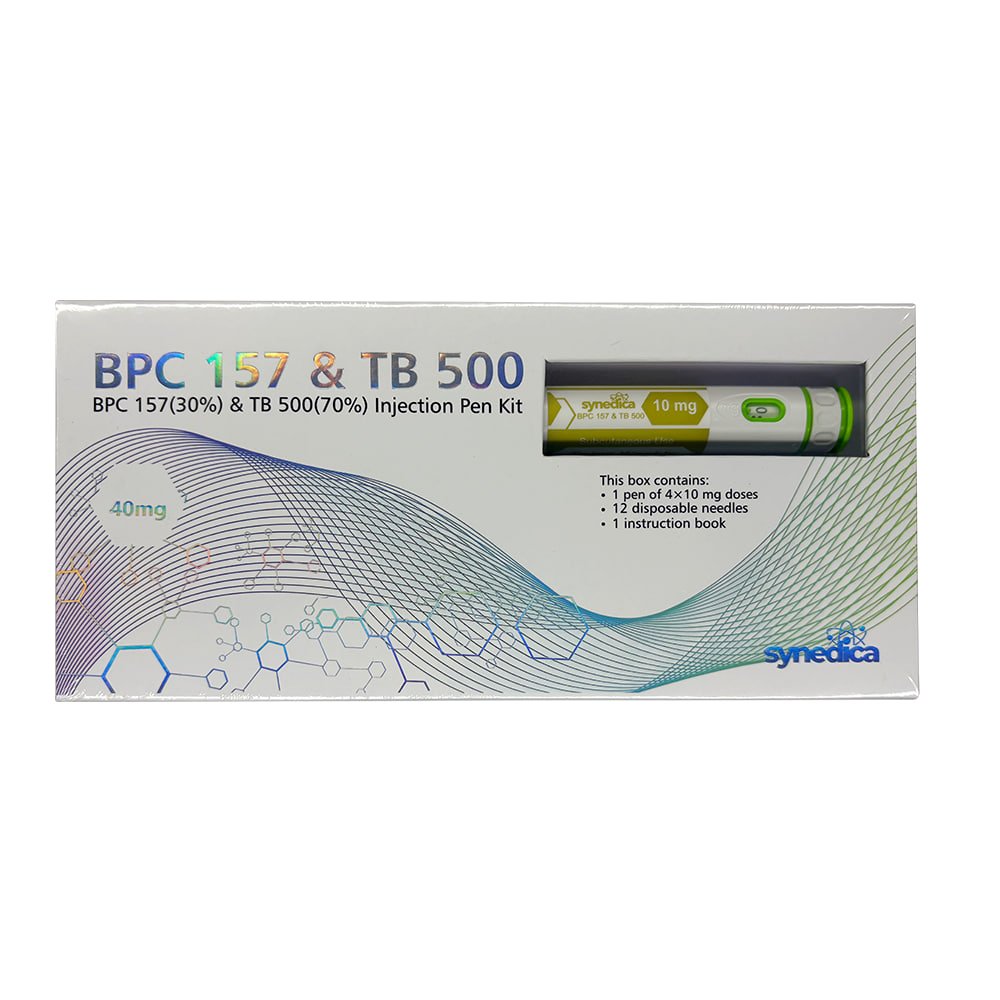
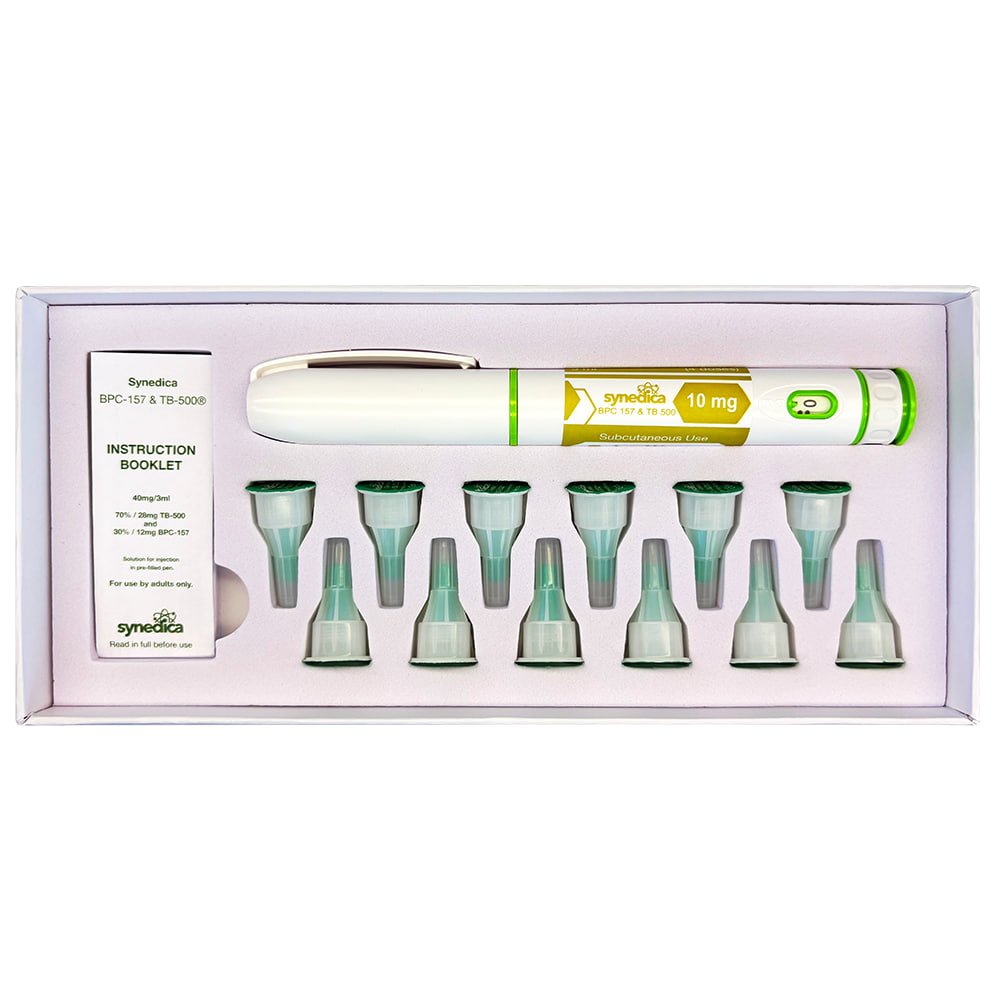
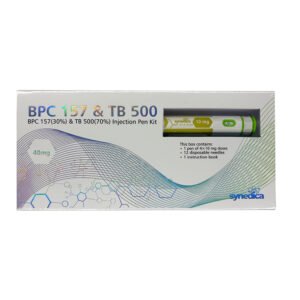
Synedica BPC-157 and TB-500 40mg — Research Compounds for Tissue Repair Pathway Studies
Synedica BPC-157 and TB-500 40mg are two of the most widely referenced synthetic peptides in tissue-repair and regenerative-biology research, each acting through distinct, well-characterized cellular mechanisms. Synedica BPC-157 and TB-500 40mg formulation is manufactured for laboratory and academic research applications examining angiogenesis, cell migration, and tissue-remodeling pathways, and is supplied strictly for research use — it is not intended for human or veterinary administration.
Synedica BPC-157 and TB-500 40mg, BPC-157: Origin and Mechanism
BPC-157 is a synthetic pentadecapeptide — a 15-amino-acid sequence — derived from a protective protein fraction originally isolated from human gastric juice. Its stability is attributed largely to a triple-proline core within the sequence, which confers resistance to proteolytic degradation and allows the intact peptide to reach target tissues in research models where most peptides break down rapidly.
Preclinical research has linked BPC-157 to upregulation of VEGFR2 (vascular endothelial growth factor receptor 2), a mechanism associated with new blood vessel formation, or angiogenesis, in animal injury models. The peptide has also been connected to activation of the FAK-paxillin signaling pathway, which governs endothelial cell migration — a necessary step in angiogenic processes — as well as modulation of nitric oxide signaling and cytoprotective cascades. Additional research in tendon fibroblast models has documented BPC-157’s effect on growth hormone receptor expression, offering a further mechanistic route by which the compound has been studied in connective tissue research.
TB-500: Origin and Mechanism
TB-500 is a synthetic peptide fragment modeled on Thymosin Beta-4 (Tβ4), a naturally occurring 43-amino-acid protein expressed in nearly all nucleated mammalian cells and encoded by the TMSB4X gene. TB-500 isolates the active actin-binding region of the parent molecule, offering researchers a more targeted tool for studying actin-regulatory activity without the full complexity of the 43-amino-acid protein.
The peptide’s principal, best-characterized mechanism is sequestration of monomeric G-actin, which controls the pool of actin available for polymerization into filamentous F-actin. When research models introduce migratory signals, TB-4-class peptides release this sequestered actin to support rapid cytoskeletal reorganization at the leading edge of a migrating cell — the basis for TB-500’s use in cell-migration research. Landmark studies have also linked Tβ4 to activation of integrin-linked kinase (ILK) and downstream Akt signaling, and to mobilization of epicardial progenitor cells with associated neovascularization in adult cardiac tissue models, extending its research relevance from basic actin biology into cardiac regeneration research.
Mechanistic Complementarity
Synedica BPC-157 and TB-500 40mg are frequently studied alongside one another in the research literature because their mechanisms are non-overlapping rather than redundant: BPC-157’s primary documented pathway operates through VEGFR2-mediated angiogenesis, while TB-500 operates through actin-cytoskeleton regulation and cell migration. It’s worth noting for research design purposes that this pairing — sometimes referred to informally in the community as a combined protocol — has not itself been the subject of dedicated published trials; the rationale for studying them together is mechanistic (two distinct, complementary repair pathways), not the result of a validated combination study.
Research Applications
Synedica BPC-157 and TB-500 40mg supports investigator-led research into:
- VEGFR2-mediated angiogenesis and endothelial cell migration (BPC-157)
- G-actin sequestration and cytoskeletal dynamics (TB-500)
- Comparative and combined-pathway tissue repair models
- Musculoskeletal injury research (tendon, ligament, muscle models)
- Cardiac and dermal regeneration research
- Nitric oxide signaling and cytoprotection research
Formulation and Handling Synedica BPC-157 and TB-500 40mg
Supplied as a lyophilized powder for research reconstitution, both peptides should be handled using standard peptide-handling protocols — appropriate cold-chain storage, sterile reconstitution technique, and controlled laboratory conditions — to preserve peptide stability and assay integrity. Purity should be verified via HPLC with mass spectrometry identity confirmation, with batch-specific certificates of analysis.
Quality and Compliance
Synedica BPC-157 and TB-500 40mg is manufactured for use by qualified researchers, laboratories, and academic institutions operating within appropriate biosafety and ethical research frameworks. It is not manufactured, tested, or labeled for human consumption, administration, or therapeutic use.
For research and educational purposes only.
Be the first to review “Synedica BPC-157 and TB-500 40mg”
Related products
Reviews
There are no reviews yet.